

Yoshiro's house
He is known as the "Edison of Japan" is the only person who has licensed 16 patents to IBM, including the floppy disk.

he quotes about himself, his country & his parents: “In my country, the drive to succeed-and the competition-is unbelievably intense. From early on, Japanese children are under enormous pressure to learn. I was fortunate that my parents encouraged my natural curiosity along with my academic learning from the very beginning. They gave me the freedom to create and invent-which I’ve been doing for as long as I can remember.”

in his library-cum-old inventions' collection. here in background we see his recording device
"PyonPyon" spring shoes
the basic technology for the floppy disk, the CD, the DVD,
the karaoke machine,
the digital watch,
CinemaScope,
armchair "Cerebrex",
sauce pump,
the taxicab meter
fax machine,
magnetic paper train tickets,
the synthesizer
Enerex, car engine that runs on tap water

He created his first invention "an automatic gravity adjustment equipment, basically inventing how all airplanes fly now" at the age of 5
Nakamatsu is a graduate of the University of Tokyo. He has so far completed four doctor thesis and claims that he will never stop studying.

frame showing Dr.NakaMats being selected by US Science Academic Society as one of five world No.1 great scientists in history: Archimedes, Michael Faraday, Marie Curie, Nikola Tesla and Yoshiro NakaMats.

He invented the Enerex, a pollution free car engine that runs on tap water and can generate three times as much power as a standard gasoline engine. It splits water, producing hydrogen as the fuel.

love jet - his answer to viagra

Nakamatsu also takes regular power naps, and he’s invented a device to enhance that, too. It’s called the Cereberex chair, and according to Dr. NakaMats “it improves memory, math skills, and creativity, and it can lower blood pressure, improve eyesight, and cure other ailments.

Special sound frequencies pulse from footrest to headrest, stimulating blood circulation and increasing synaptic activity in the brain. An hour in my chair refreshes the brain as much as eight hours of sleep.” The Cereberex works by cooling the head and heating the feet, which does indeed increase the blood circulation to the brain.

According to Dr. NakaMats’ research, the unhealthy body has a poor blood circulation to extremities resulting cold feet. This is the same state with the stressed body in which your sympathetic nervous system took over parasympathetic nervous system. Sympathetic nervous system anticipates your body for “fight-or-flight” situation.

He says that for “triggering” an invention a lack of oxygen is very important. "It’s very dangerous. I get that Flash just 0.5 sec before death. I remain under the surface until this trigger comes up and I write it down with a special waterproof plexiglas writing pad I invented."

He is working towards another 3000 inventions to make the record of 6,000 inventions before death.

Nakamatsu claims that he licensed about a dozen of his patents related to the floppy disk technology to IBM Corporation in 1979, but the details of the arrangement are confidential. A spokesman for IBM said that the company has an "ongoing relationship" with Nakamatsu, and, in another media report, said that the company owns the legal patent to the floppy disk and that it reached several nonexclusive patent agreements with Nakamatsu in the late 1970s to avoid conflicts. Nakamatsu has appeared on several American TV shows, including Lifestyles of the Rich and Famous and Late Night with David Letterman. He also appeared on the BBC show Adam and Joe Go Tokyo. In 2007, Nakamatsu became a candidate in the 2007 gubernatorial election in Tokyo, and also ran for the Upper House election, but failed to get a seat. He is known for frequently entering and losing elections in Tokyo.

thats how a ig nobel prize looks like

thats how a ig nobel prize looks like
He was awarded the 2005 Ig Nobel prize for Nutrition, for photographing and retrospectively analyzing every meal he has consumed during a period of 34 years (and counting).

manga about Dr.NakaMats for Shonen Jump, about 10 years ago
The goal of Nakamatsu is to live at least 144 (12x12, Japanese century) years.
_______________________________________
An Interview with Dr. Yoshiro Nakamatsu
Interviewed by Chic Thompson
recorded April 29, 1990, in Pittsburgh, Pennsylvania
An Interview with Dr. Yoshiro Nakamatsu
Interviewed by Chic Thompson
recorded April 29, 1990, in Pittsburgh, Pennsylvania
_______________________________________
Nakamatsu:
In my country, the drive to succeed-and the competition-is unbelievably intense. From early on, Japanese children are under enormous pressure to learn. I was fortunate that my parents encouraged my natural curiosity along with my academic learning from the very beginning. They gave me the freedom to create and invent-which I've been doing for as long as I can remember.
Chic:
What are the teaching methods used to prepare Japanese children for the strong competition they face? And how does this affect creativity?
Nakamatsu:
One method is memorization. We teach our kids to memorize until the age of twenty, for we have discovered that the human brain needs memorization up to that point. Then young people can begin free-associating, putting everything together. That's how geniuses are formed. If a child doesn't learn how to memorize effectively, he doesn't reach his full potential.
Chic:
So you feel that creativity comes from a balance of regimentation and freedom?
Nakamatsu:
Yes, but freedom is most important of all. Genius lies in developing complete and perfect freedom within a human being. Only then can a person come up with the best ideas.
Chic:
We have a difficult time in this country because we don't allow ourselves that kind of freedom. We have what we call the Protestant work ethic that says, "If at first you don't succeed, try and try again." To me, trying too hard stifles creativity.
Nakamatsu:
That's unfortunate. It's crucial to be able to find the time and the freedom to develop your best ideas.
Chic:
Then tell me about your routine to spark creativity. I've heard that you come up with ideas underwater!
Nakamatsu:
Yes, that's part of a three-step process. When developing ideas, the first rule is You have to be calm. So I've created what I call my "static" room. It's a place of peace and quiet. In this room, I only have natural things: a rock garden, natural running water, plants, a five-ton boulder from Kyoto. The walls are white. I can look out on the Tokyo skyline, but in the room there is no metal or concrete-only natural things like water and rock and wood.
Chic:
So you go into your "static" room to meditate?
Nakamatsu:
No, just the opposite! I go into the room to free-associate. It's what you must do before meditating, before focusing on one thing. I just throw out ideas-I let my mind wander where it will.
Chic:
I call that "naive incubation."
Nakamatsu:
Yes, it's my time to let my mind be free. Then I go into my "dynamic" room, which is just the opposite of my "static" room. The "dynamic" room is dark, with black-and-white-striped walls, leather furniture, and special audio and video equipment. I've created speakers with frequencies between 12 and 40,000 hertz-which, you can imagine, are quite powerful. I start out listening to jazz, then change to what you call "easy listening," and always end with Beethoven's Fifth Symphony. For me, Beethoven's Fifth is good music for conclusions.
Chic:
And finally you go to your swimming pool...
Nakamatsu:
Exactly-the final stage. I have a special way of holding my breath and swimming underwater-that's when I come up with my best ideas. I've created a Plexiglas writing pad so that I can stay underwater and record these ideas. I call it "creative swimming."
Chic:
That seems to fit very well with the strategy I teach in my creativity workshops: discover and use your "idea-friendly times."
Nakamatsu:
Yes, but in doing this, you must prepare your body. You can only eat the best foods. You cannot drink alcohol.
Chic:
I've heard that you've come up with your own "brain food."
Nakamatsu:
Yes, these are snacks I've invented, which I eat during the day. I've marketed them as Yummy Nutri Brain Food. They are very helpful to the brain's thinking process. They are a special mixture of dried shrimp, seaweed, cheese, yogurt, eel, eggs, beef, and chicken livers-all fortified with vitamins.
Chic:
How many people-technicians, researchers, and assistants-do you employ to help with your inventions?
Nakamatsu:
In all, I have 110 employees.
Chic:
And what exactly do they do?
Nakamatsu:
They work with my ideas, make prototypes, and give other assistance with details.
Chic:
Do you come up with ideas at night?
Nakamatsu:
I come up with ideas anytime! I only sleep four hours a night.
Chic:
That's interesting-that's very similar to Thomas Edison. Do you take naps like he did?
Nakamatsu:
Yes. Twice a day I take thirty-minute naps in a special chair I've designed-the Cerebrex chair. It improves memory, math skills, and creativity, and it can lower blood pressure, improve eyesight, and cure other ailments.
Chic:
How does the Cerebrex work?
Nakamatsu:
Special sound frequencies pulse from footrest to headrest, stimulating blood circulation and increasing synaptic activity in the brain. An hour in my chair refreshes the brain as much as eight hours of sleep.
Chic:
So, like Edison, you're awake most of the time. Do you agree with Edison's claim that ideas are 1 percent inspiration and 99 percent perspiration?
Nakamatsu:
No, now it's just the opposite! Now it's 1 percent perspiration and 99 percent "ikispiration." Now, more than ever, we have to have ikispiration. This means I encourage myself to go through my three elements of creation: suji, the theory of knowledge; pika, inspiration; and iki, practicality, feasibility, and marketability. In order to be successful, you must go through all three stages and make sure that your ideas stand up to all of them, which is ikispiration. Also, these days, the computer saves time and cuts out the 99 percent perspiration.
Chic:
Do you find that most American research-and-development firms take themselves through your three stages?
Nakamatsu:
Most are very thorough with suji, or theory, but don't concentrate on the iki, marketability. Hardest of all, of course, is pika, the creative inspiration. Researchers often have trouble with pika because they're too focused on one particular element. A genius must be a well-rounded person, familiar with many things: art, music, science, sports. He or she can't be restricted to only one field of expertise.
Chic:
Well, you certainly appear to practice what you preach. You know so much about music, about art, about sports.
Nakamatsu:
That's what genius is, when you're able to discuss, and to be good at, many things. As much as I enjoy hearing about the things you [Chic] have invented during your chemistry career, about your teaching, about your video programs, I'm most fascinated by the fact that a person who can be a chemist and a teacher and a speaker can also be a cartoonist. And at such a young age!
Chic:
Well, people do kid me about looking young, but I could say the same thing about you.
Nakamatsu:
That comes from eating the right foods and participating in the right athletics. Certain activities I believe aren't good for creativity. To be creative, you must have perfect freedom. Sports like jogging, tennis, and golf, I don't believe, are conducive to the brain waves for creativity.
Chic:
Hmmmm. I'd really like to see your research on that, because I know a lot of people who feel they come up with their ideas when they go out jogging. Maybe, for Americans, because we don't allow ourselves to have perfect freedom at work, we can get part of the way there by jogging or golfing-that's the only time we give ourselves permission to be free enough to come up with new ideas.
Nakamatsu:
Maybe so, but they won't be your best ideas-you're not at your peak creative performance if you have to use athletics or techniques to get your ideas. It's only when you have perfect freedom that your best ideas come out.
Chic:
What are some of your suggestions to American executives on ways to become more creative?
Nakamatsu:
I'd like to see the work ethic in the United States more geared to creativity. We need more creative people and more creative leaders. Governments as a whole must learn to be more creative. I've just written a book called The Invention of Government.
I'm trying to show that through the creative process, governments-not just individuals-can be more innovative. Among my goals right now are working in political reform in Japan and improving our relationship with the United States.
I want Americans and others to understand that many of the perceived barriers between nations-trade barriers, cultural barriers-aren't as strong as people think they are. It's just that we don't understand each other as well as we should, and that means we must become more open with each other.
Chic:
In that regard, I'm very impressed by your openness to discuss and to spend so many hours with me. So many people in the United States who have one or two good ideas don't share them with anyone. They're afraid that people are going to steal them. And here you've opened up an International Genius Convention-for everyone to display their ideas.
Nakamatsu:
No, so let's invent a product together. What would you buy today if it were available?
Chic:
I'd buy a recording device, about the size of a credit card, that could fit in my shirt pocket. Every time I had a flash of an idea, I could just record it. It would be voice-activated, with a very large memory, and have a voice-activated filing system for idea management.
Nakamatsu:
What would you call it?
Chic:
I'd call it "Flash"- because it would just be flashes of ideas, which you could then download onto a computer system.
Nakamatsu:
Very good.
Chic:
[He then gave me a ten-minute education on micro technology and a grilling on what I thought of the idea's market potential.]
Nakamatsu:
This will be our first product together, so when I get home, I'll turn it over to my research department.Let me thank you. You seem to have the ability to network and to learn from others all the time.That's what it takes to succeed. And, for every meeting, I like to keep a visual record. That's why my wife has been taking pictures and recording our conversation on the camcorder. When something is on video, I can go back and reference the face and the voice, not just written notes. Now, would you please type in your name?
Chic:
Excuse me?
Nakamatsu:
Type in your name on this infrared recorder, and it will appear directly on the photographs that we took, along with today's date.
Chic:
I've never seen anything like this!
Nakamatsu:
I know. One of my recent inventions.
Dr. NakaMats explains his various inventions by flipping through his book ‘The Legend Of Dr. NakaMats’ Inventions’.
It all started with the tea we were served…
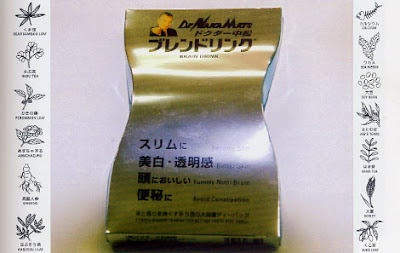
Dr. Nakamats: This is made out of 13 different herbs, has a very nice taste and it makes you smarter. It is my invention called “Brain Drink”!
Thanks a lot! Tastes like… tea!?
You earned the IG Nobel prize last year. May I ask what they gave you the prize for?
For nutrition, meaning my research in finding the best possible food to eat to keep you healthy and your brain fit. I did that by taking photos of every single meal I ate for the last 35 years and analyzing what is good for health and what isn’t.

Interesting! It says, that you have licensed 16 patents to IBM for the creation of the floppy disk, the hard disc, tape transport, etc. and in your book it says that you already invented the floppy disk while you were still at college…
Yes, it took 35 years for it to eventually get produced, but I already invented it much earlier.
I see! So how did you become an inventor in the first place?
My mother taught me physics, chemistry, English, Japanese, history and humor… these basic elements from the age of 3.
At the age of 14 I invented the pump. I saw that my mother was having a hard time refilling soy sauce from a big bottle to a smaller one, and wanted to create something that made life easier for her. After the war and even now people use it to refill Kerosene a lot.
That is the core of my inventions: not money, but the spirit of my inventions is LOVE!

There is an incredible variety of products in your “The Legend of Dr. Nakamats’ Inventions” book and many items can be purchased from your website. So you are not just an inventor, you are a producer as well?
Usually, inventors only “think”. I don’t consider that to be perfect. Inventors should have the capability to produce and distribute their products so that users can benefit from their thought process. My principles are theory, flash (trigger) and production. The “idea” alone does not count as an “invention”.
Is there a secret to becoming an inventor? How do you come up with new ideas?

"The spirit of invention is LOVE. Genius lies in developing complete and perfect freedom within a human being. Only then can a person come up with the best ideas." he says
I am teaching philosophy at the University of Tokyo and this image (above right) shows my theory: the “Pagoda of Creativity”. The base for everything is a strong spirit, followed by a strong body, hard studies, experience and finally leads to a “trigger” experience. You “trigger” a bullet which contains spirit, body, study and experience - and finally that releases the actual invention.
How do you ‘trigger’ an invention?
A lack of oxygen is very important.
A lack? Isn’t that dangerous??
It’s very dangerous. I get that Flash just 0.5 sec before death. I remain under the surface until this trigger comes up and I write it down with a special waterproof plexiglas writing pad I invented.
Do you do that a lot? Putting yourself in that kind of situation to come up with a new invention?
Of course.
This is the Dr. Nakamatsu method. Another possible method is to use a completely calm room - that could even be my toilet which shuts out every noise and every magnetic and electronic field. Such a calm room erases all noise from your brain, you can concentrate and think.

After that you can go to a dynamic room, listen to music and mix thoughts inside your brain. The environment is very important for inventing.

True! You seem to be quite interested in passing on your knowledge about how to become a genius. You even have a so called “Genius Academy” in your house. Could you quickly explain what that is?
Well, I’m doing many things here… I have 29 guest houses called “Dr. Nakamats Green Terrace” and there are 29 geniuses living here: computer geniuses, artistic geniuses… There is a waiting list of about 100 people who simply want to live here to get inspired by me and my inventions. Every month I give a lecture where I teach spirit, creativity and many other things. We also sing a song about the spirit of invention being LOVE.
Oh! I’ve heard the Dr.NakaMats song!
Drinks for thought, “Yummy Nutri Brain Foods”, exercise, singing songs or using your Cerebrex chair (which is supposed to improve the brain capability by increasing your blood circulation through electricity)… All these inventions should help you to get smarter. Special sound frequencies pulse from footrest to headrest, stimulating your blood circulation and increasing the synaptic activity in the brain. Apparently one hour in the Cerebrex chair refreshes the brain equally to eight hours of sleep. Dr. Nakamats takes a nap in it every day.
But is there anyone you consider close to becoming the next Dr. Nakamats? The next genius? Your sons maybe?
No. Invention is very difficult.
A friend of mine has seen some students wearing your flying shoes on a campus in the US and you wore them on stage yourself when House of Pain played “jump around” in Japan. What would you call your most successful invention? What product is used most by people?
All my inventions are a 100% success, because they are based on the philosophy of creativity and inventiveness.

Yoshiro 's flying shoes - PyonPyon flying shoes allow the wearer to leap into the air with minimal effort.
I made many things… sampling, too! Sampling is the basis of a synthesizer, so every musician is using my invention. Who is that blind musician again….
Stevie Wonder?
Yes, he came up to me and said “thank you for inventing this”.

On our way to the Dr. Nakamats Lab, we noticed many little strange things around the house. One being the funny angle on the left side of the stairs. Encouraged by Dr. Nakamats I used them accordingly (half stepping on them while going up) and realized that this little trick really made my way up easier!

slight angle on the left side of the stairs makes walking up easier


one of the first floppy discs framed along with various awards in the Dr.NakaMats lab
Arriving in the lab, we felt like entering a museum of its own kind. All inventions could be seen as prototypes or final products: Cerebrex chairs, the first floppy disk reader ever made and Dr. Nakamats’ revolutionary golf putter.

Realizing this revolutionary golf putter took him 15 years. Dr.NakaMats invented it, because he was bad at golf. ‘Many leaders including George Bush, Maggie Thatcher and the Japanese prime minister are using this, too.’

a 5 times better score is promised with this putter, the unusual grip and different head are said to control direction and speed much better
What is this? Looks like a motor…
Yes, this is also an important invention. In the future all the cars will be running with this, called the Dr.Nakamats Nostradam vs Engine II. It can run with just water, so there is no pollution at all.

Dr.Nakamats Nostradam vs Engine II, which is fueled with water
Suddenly I look up and notice… What is this table doing there on the ceiling???
Oh, this is the table I used with my mother and father. I invented some things sitting at that table, which is why I put it in this room.
On the ceiling…
Yes.
I see! What are you actually currently working on?
Many things, but the latest invention is probably the Love Jet 200, the strongest of this series so far. If you spray this onto yourself, you can attract people and your skin will get better, too.
(All laugh)

Love Jet, a sex-aid spray which simply beats Viagra! By increasing the secretion of the androgen dehydroepiandrosterone (DHEA) it safely boosts your libido, improves your memory and minimizes aging of the skin. Love Jet brought in over $5 million in Japan sales in 1999, the year it was unveiled in the US. Dr.NakaMats hopes that this formula promotes more fertility among Japanese and increases the country’s birth-rate.
What is this wig with wheels doing on that table?
This is for a film called Dura deka (Police detective with a wig), which is currently screened at Cine Quint in Shibuya. I’m in the film, too and I invented this wig for it.
Well, it’s been a very inspiring tour! Is there anything else, any message from you to our readers?
My message is… the spirit of invention is LOVE.
Dr.NakaMats in his library surrounded by a cerebrex chair, flying shoes, honorary awards, revolutionary recording devices, a framed letter from former US president George Bush, Sr. and wigs on wheels…
Nakamatsu:
In my country, the drive to succeed-and the competition-is unbelievably intense. From early on, Japanese children are under enormous pressure to learn. I was fortunate that my parents encouraged my natural curiosity along with my academic learning from the very beginning. They gave me the freedom to create and invent-which I've been doing for as long as I can remember.
Chic:
What are the teaching methods used to prepare Japanese children for the strong competition they face? And how does this affect creativity?
Nakamatsu:
One method is memorization. We teach our kids to memorize until the age of twenty, for we have discovered that the human brain needs memorization up to that point. Then young people can begin free-associating, putting everything together. That's how geniuses are formed. If a child doesn't learn how to memorize effectively, he doesn't reach his full potential.
Chic:
So you feel that creativity comes from a balance of regimentation and freedom?
Nakamatsu:
Yes, but freedom is most important of all. Genius lies in developing complete and perfect freedom within a human being. Only then can a person come up with the best ideas.
Chic:
We have a difficult time in this country because we don't allow ourselves that kind of freedom. We have what we call the Protestant work ethic that says, "If at first you don't succeed, try and try again." To me, trying too hard stifles creativity.
Nakamatsu:
That's unfortunate. It's crucial to be able to find the time and the freedom to develop your best ideas.
Chic:
Then tell me about your routine to spark creativity. I've heard that you come up with ideas underwater!
Nakamatsu:
Yes, that's part of a three-step process. When developing ideas, the first rule is You have to be calm. So I've created what I call my "static" room. It's a place of peace and quiet. In this room, I only have natural things: a rock garden, natural running water, plants, a five-ton boulder from Kyoto. The walls are white. I can look out on the Tokyo skyline, but in the room there is no metal or concrete-only natural things like water and rock and wood.
Chic:
So you go into your "static" room to meditate?
Nakamatsu:
No, just the opposite! I go into the room to free-associate. It's what you must do before meditating, before focusing on one thing. I just throw out ideas-I let my mind wander where it will.
Chic:
I call that "naive incubation."
Nakamatsu:
Yes, it's my time to let my mind be free. Then I go into my "dynamic" room, which is just the opposite of my "static" room. The "dynamic" room is dark, with black-and-white-striped walls, leather furniture, and special audio and video equipment. I've created speakers with frequencies between 12 and 40,000 hertz-which, you can imagine, are quite powerful. I start out listening to jazz, then change to what you call "easy listening," and always end with Beethoven's Fifth Symphony. For me, Beethoven's Fifth is good music for conclusions.
Chic:
And finally you go to your swimming pool...
Nakamatsu:
Exactly-the final stage. I have a special way of holding my breath and swimming underwater-that's when I come up with my best ideas. I've created a Plexiglas writing pad so that I can stay underwater and record these ideas. I call it "creative swimming."
Chic:
That seems to fit very well with the strategy I teach in my creativity workshops: discover and use your "idea-friendly times."
Nakamatsu:
Yes, but in doing this, you must prepare your body. You can only eat the best foods. You cannot drink alcohol.
Chic:
I've heard that you've come up with your own "brain food."
Nakamatsu:
Yes, these are snacks I've invented, which I eat during the day. I've marketed them as Yummy Nutri Brain Food. They are very helpful to the brain's thinking process. They are a special mixture of dried shrimp, seaweed, cheese, yogurt, eel, eggs, beef, and chicken livers-all fortified with vitamins.
Chic:
How many people-technicians, researchers, and assistants-do you employ to help with your inventions?
Nakamatsu:
In all, I have 110 employees.
Chic:
And what exactly do they do?
Nakamatsu:
They work with my ideas, make prototypes, and give other assistance with details.
Chic:
Do you come up with ideas at night?
Nakamatsu:
I come up with ideas anytime! I only sleep four hours a night.
Chic:
That's interesting-that's very similar to Thomas Edison. Do you take naps like he did?
Nakamatsu:
Yes. Twice a day I take thirty-minute naps in a special chair I've designed-the Cerebrex chair. It improves memory, math skills, and creativity, and it can lower blood pressure, improve eyesight, and cure other ailments.
Chic:
How does the Cerebrex work?
Nakamatsu:
Special sound frequencies pulse from footrest to headrest, stimulating blood circulation and increasing synaptic activity in the brain. An hour in my chair refreshes the brain as much as eight hours of sleep.
Chic:
So, like Edison, you're awake most of the time. Do you agree with Edison's claim that ideas are 1 percent inspiration and 99 percent perspiration?
Nakamatsu:
No, now it's just the opposite! Now it's 1 percent perspiration and 99 percent "ikispiration." Now, more than ever, we have to have ikispiration. This means I encourage myself to go through my three elements of creation: suji, the theory of knowledge; pika, inspiration; and iki, practicality, feasibility, and marketability. In order to be successful, you must go through all three stages and make sure that your ideas stand up to all of them, which is ikispiration. Also, these days, the computer saves time and cuts out the 99 percent perspiration.
Chic:
Do you find that most American research-and-development firms take themselves through your three stages?
Nakamatsu:
Most are very thorough with suji, or theory, but don't concentrate on the iki, marketability. Hardest of all, of course, is pika, the creative inspiration. Researchers often have trouble with pika because they're too focused on one particular element. A genius must be a well-rounded person, familiar with many things: art, music, science, sports. He or she can't be restricted to only one field of expertise.
Chic:
Well, you certainly appear to practice what you preach. You know so much about music, about art, about sports.
Nakamatsu:
That's what genius is, when you're able to discuss, and to be good at, many things. As much as I enjoy hearing about the things you [Chic] have invented during your chemistry career, about your teaching, about your video programs, I'm most fascinated by the fact that a person who can be a chemist and a teacher and a speaker can also be a cartoonist. And at such a young age!
Chic:
Well, people do kid me about looking young, but I could say the same thing about you.
Nakamatsu:
That comes from eating the right foods and participating in the right athletics. Certain activities I believe aren't good for creativity. To be creative, you must have perfect freedom. Sports like jogging, tennis, and golf, I don't believe, are conducive to the brain waves for creativity.
Chic:
Hmmmm. I'd really like to see your research on that, because I know a lot of people who feel they come up with their ideas when they go out jogging. Maybe, for Americans, because we don't allow ourselves to have perfect freedom at work, we can get part of the way there by jogging or golfing-that's the only time we give ourselves permission to be free enough to come up with new ideas.
Nakamatsu:
Maybe so, but they won't be your best ideas-you're not at your peak creative performance if you have to use athletics or techniques to get your ideas. It's only when you have perfect freedom that your best ideas come out.
Chic:
What are some of your suggestions to American executives on ways to become more creative?
Nakamatsu:
I'd like to see the work ethic in the United States more geared to creativity. We need more creative people and more creative leaders. Governments as a whole must learn to be more creative. I've just written a book called The Invention of Government.
I'm trying to show that through the creative process, governments-not just individuals-can be more innovative. Among my goals right now are working in political reform in Japan and improving our relationship with the United States.
I want Americans and others to understand that many of the perceived barriers between nations-trade barriers, cultural barriers-aren't as strong as people think they are. It's just that we don't understand each other as well as we should, and that means we must become more open with each other.
Chic:
In that regard, I'm very impressed by your openness to discuss and to spend so many hours with me. So many people in the United States who have one or two good ideas don't share them with anyone. They're afraid that people are going to steal them. And here you've opened up an International Genius Convention-for everyone to display their ideas.
Nakamatsu:
No, so let's invent a product together. What would you buy today if it were available?
Chic:
I'd buy a recording device, about the size of a credit card, that could fit in my shirt pocket. Every time I had a flash of an idea, I could just record it. It would be voice-activated, with a very large memory, and have a voice-activated filing system for idea management.
Nakamatsu:
What would you call it?
Chic:
I'd call it "Flash"- because it would just be flashes of ideas, which you could then download onto a computer system.
Nakamatsu:
Very good.
Chic:
[He then gave me a ten-minute education on micro technology and a grilling on what I thought of the idea's market potential.]
Nakamatsu:
This will be our first product together, so when I get home, I'll turn it over to my research department.Let me thank you. You seem to have the ability to network and to learn from others all the time.That's what it takes to succeed. And, for every meeting, I like to keep a visual record. That's why my wife has been taking pictures and recording our conversation on the camcorder. When something is on video, I can go back and reference the face and the voice, not just written notes. Now, would you please type in your name?
Chic:
Excuse me?
Nakamatsu:
Type in your name on this infrared recorder, and it will appear directly on the photographs that we took, along with today's date.
Chic:
I've never seen anything like this!
Nakamatsu:
I know. One of my recent inventions.
_______________________________________
An Interview with Dr. Yoshiro Nakamatsu
Written by Uleshka
Photos by Maris Mezulis
_______________________________________An Interview with Dr. Yoshiro Nakamatsu
Written by Uleshka
Photos by Maris Mezulis
Dr. NakaMats explains his various inventions by flipping through his book ‘The Legend Of Dr. NakaMats’ Inventions’.
It all started with the tea we were served…
Dr. Nakamats: This is made out of 13 different herbs, has a very nice taste and it makes you smarter. It is my invention called “Brain Drink”!
Thanks a lot! Tastes like… tea!?

nakamats's Brain Drink’s funky packaging
You earned the IG Nobel prize last year. May I ask what they gave you the prize for?
For nutrition, meaning my research in finding the best possible food to eat to keep you healthy and your brain fit. I did that by taking photos of every single meal I ate for the last 35 years and analyzing what is good for health and what isn’t.

World’s first floppy discs originally created by no other than Dr. NakaMats
Interesting! It says, that you have licensed 16 patents to IBM for the creation of the floppy disk, the hard disc, tape transport, etc. and in your book it says that you already invented the floppy disk while you were still at college…
Yes, it took 35 years for it to eventually get produced, but I already invented it much earlier.
I see! So how did you become an inventor in the first place?
My mother taught me physics, chemistry, English, Japanese, history and humor… these basic elements from the age of 3.

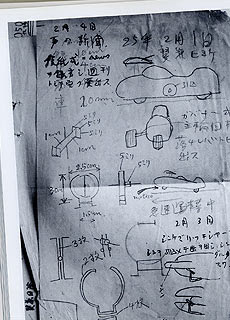
some very early sketches from the ‘NakaMatsu Research Institute of Invention Volume 2′, started in middle school (lisiting inventions No.233-400)
At the age of 14 I invented the pump. I saw that my mother was having a hard time refilling soy sauce from a big bottle to a smaller one, and wanted to create something that made life easier for her. After the war and even now people use it to refill Kerosene a lot.
That is the core of my inventions: not money, but the spirit of my inventions is LOVE!

Original pump to refill soy sauce created at age 14. Now you can buy this pump in every shop around the corner.
There is an incredible variety of products in your “The Legend of Dr. Nakamats’ Inventions” book and many items can be purchased from your website. So you are not just an inventor, you are a producer as well?
Usually, inventors only “think”. I don’t consider that to be perfect. Inventors should have the capability to produce and distribute their products so that users can benefit from their thought process. My principles are theory, flash (trigger) and production. The “idea” alone does not count as an “invention”.
Is there a secret to becoming an inventor? How do you come up with new ideas?

I am teaching philosophy at the University of Tokyo and this image (above right) shows my theory: the “Pagoda of Creativity”. The base for everything is a strong spirit, followed by a strong body, hard studies, experience and finally leads to a “trigger” experience. You “trigger” a bullet which contains spirit, body, study and experience - and finally that releases the actual invention.
How do you ‘trigger’ an invention?
A lack of oxygen is very important.
A lack? Isn’t that dangerous??
It’s very dangerous. I get that Flash just 0.5 sec before death. I remain under the surface until this trigger comes up and I write it down with a special waterproof plexiglas writing pad I invented.
Do you do that a lot? Putting yourself in that kind of situation to come up with a new invention?
Of course.
This is the Dr. Nakamatsu method. Another possible method is to use a completely calm room - that could even be my toilet which shuts out every noise and every magnetic and electronic field. Such a calm room erases all noise from your brain, you can concentrate and think.

Dr.NakaMats’ golden toilet is one of many calm rooms he has around the house, which completely shut out all disturbing noises and electronic fields to empty your mind allow you to concentrate.
After that you can go to a dynamic room, listen to music and mix thoughts inside your brain. The environment is very important for inventing.

This is the dynamic room in Dr.NakaMatsu’s old house - music, patterns and textures stimulate the brain, allow you to mix ideas in your head and create new inventions.
True! You seem to be quite interested in passing on your knowledge about how to become a genius. You even have a so called “Genius Academy” in your house. Could you quickly explain what that is?
Well, I’m doing many things here… I have 29 guest houses called “Dr. Nakamats Green Terrace” and there are 29 geniuses living here: computer geniuses, artistic geniuses… There is a waiting list of about 100 people who simply want to live here to get inspired by me and my inventions. Every month I give a lecture where I teach spirit, creativity and many other things. We also sing a song about the spirit of invention being LOVE.
Oh! I’ve heard the Dr.NakaMats song!
Drinks for thought, “Yummy Nutri Brain Foods”, exercise, singing songs or using your Cerebrex chair (which is supposed to improve the brain capability by increasing your blood circulation through electricity)… All these inventions should help you to get smarter. Special sound frequencies pulse from footrest to headrest, stimulating your blood circulation and increasing the synaptic activity in the brain. Apparently one hour in the Cerebrex chair refreshes the brain equally to eight hours of sleep. Dr. Nakamats takes a nap in it every day.
But is there anyone you consider close to becoming the next Dr. Nakamats? The next genius? Your sons maybe?
No. Invention is very difficult.
A friend of mine has seen some students wearing your flying shoes on a campus in the US and you wore them on stage yourself when House of Pain played “jump around” in Japan. What would you call your most successful invention? What product is used most by people?
All my inventions are a 100% success, because they are based on the philosophy of creativity and inventiveness.

Yoshiro 's flying shoes - PyonPyon flying shoes allow the wearer to leap into the air with minimal effort.
I made many things… sampling, too! Sampling is the basis of a synthesizer, so every musician is using my invention. Who is that blind musician again….
Stevie Wonder?
Yes, he came up to me and said “thank you for inventing this”.

Dr.NakaMatsu in the old days with his synthesizer
On our way to the Dr. Nakamats Lab, we noticed many little strange things around the house. One being the funny angle on the left side of the stairs. Encouraged by Dr. Nakamats I used them accordingly (half stepping on them while going up) and realized that this little trick really made my way up easier!

slight angle on the left side of the stairs makes walking up easier

This ‘first floppy disk reader ever made’ was built by Dr.NakaMatsu himself out of wood. He received a Japanese patent in 1952 for inventing magnetic and light sensors, the core of the floppy disk technology - 20 years before IBM.

one of the first floppy discs framed along with various awards in the Dr.NakaMats lab
Arriving in the lab, we felt like entering a museum of its own kind. All inventions could be seen as prototypes or final products: Cerebrex chairs, the first floppy disk reader ever made and Dr. Nakamats’ revolutionary golf putter.

Realizing this revolutionary golf putter took him 15 years. Dr.NakaMats invented it, because he was bad at golf. ‘Many leaders including George Bush, Maggie Thatcher and the Japanese prime minister are using this, too.’

a 5 times better score is promised with this putter, the unusual grip and different head are said to control direction and speed much better
What is this? Looks like a motor…
Yes, this is also an important invention. In the future all the cars will be running with this, called the Dr.Nakamats Nostradam vs Engine II. It can run with just water, so there is no pollution at all.

Dr.Nakamats Nostradam vs Engine II, which is fueled with water
Suddenly I look up and notice… What is this table doing there on the ceiling???
Oh, this is the table I used with my mother and father. I invented some things sitting at that table, which is why I put it in this room.
On the ceiling…
Yes.
I see! What are you actually currently working on?
Many things, but the latest invention is probably the Love Jet 200, the strongest of this series so far. If you spray this onto yourself, you can attract people and your skin will get better, too.
(All laugh)

Love Jet, a sex-aid spray which simply beats Viagra! By increasing the secretion of the androgen dehydroepiandrosterone (DHEA) it safely boosts your libido, improves your memory and minimizes aging of the skin. Love Jet brought in over $5 million in Japan sales in 1999, the year it was unveiled in the US. Dr.NakaMats hopes that this formula promotes more fertility among Japanese and increases the country’s birth-rate.
What is this wig with wheels doing on that table?
This is for a film called Dura deka (Police detective with a wig), which is currently screened at Cine Quint in Shibuya. I’m in the film, too and I invented this wig for it.
Well, it’s been a very inspiring tour! Is there anything else, any message from you to our readers?
My message is… the spirit of invention is LOVE.
Dr.NakaMats in his library surrounded by a cerebrex chair, flying shoes, honorary awards, revolutionary recording devices, a framed letter from former US president George Bush, Sr. and wigs on wheels…
******************** Contact information ***********************
Dr. NakaMats Innovation Institute
Landic Akasaka No.2 Bldg. 10-9 2 chome
Akasaka, Minato-ku, Tokyo 107-0052, Japan
Phone:(03) 3585-8585 Fax:(03) 3589-5858
Email: info@Dr.NakaMats.com
*******************************************
********* thanks for reading this post :) *********
Landic Akasaka No.2 Bldg. 10-9 2 chome
Akasaka, Minato-ku, Tokyo 107-0052, Japan
Phone:(03) 3585-8585 Fax:(03) 3589-5858
Email: info@Dr.NakaMats.com
*******************************************
********* thanks for reading this post :) *********


